Morning light along the coast
CLYNE RESEARCH

A little more understanding.
A life with more possibility.

AI-generated brand film · Higgsfield
LIVE AHEAD. STAY CURIOUS.

Understand more. Live ahead.

Original papers. Clear explanations. A conversation about what comes next.

Explore the evidence.

15 papers to explore · original sources

THE ORIGINAL, BESIDE THE EXPLANATION
Nature MedicineOriginal paper · 2022 · 23 pages
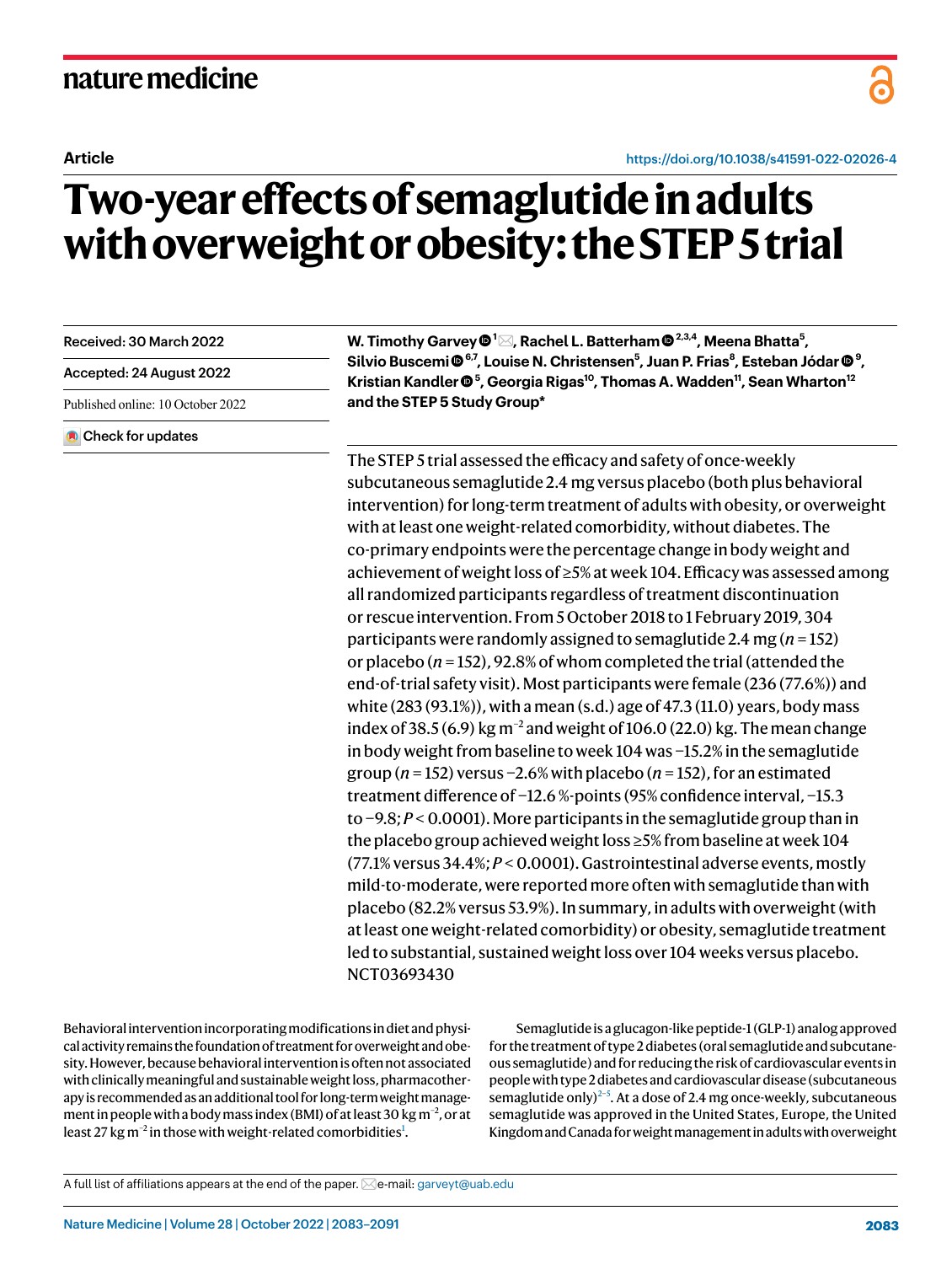
Original published paper, page 1: Two-year effects of semaglutide in adults with overweight or obesity: the STEP 5 trial
CC BY 4.0 · Original sourcePublication ↗
Bring your own context to the evidence.Sign in to personalize
IN PLAIN ENGLISHFull paper

This trial found that adults with obesity or overweight (plus a weight-related condition) who took once-weekly injectable semaglutide 2.4 mg alongside behavioral support lost significantly more weight than those on placebo plus behavioral support over 104 weeks. Weight loss appeared to plateau around week 60 and was largely maintained through year two. At week 104, average weight loss was −15.2% with semaglutide versus −2.6% with placebo, a difference of −12.6 percentage points (95% CI −15.3 to −9.8). 77.1% of semaglutide participants lost at least 5% of body weight versus 34.4% on placebo (odds ratio 5.0, 95% CI 3.0–8.4); higher weight-loss thresholds (10%, 15%, 20%) also favored semaglutide.

This trial adds two-year data on sustained weight loss and cardiometabolic changes with semaglutide plus lifestyle support, useful for discussing long-term treatment patterns and monitoring needs. Any decisions about starting, adjusting, or stopping a specific treatment should be discussed with a healthcare provider based on individual health history.

Study details & limits

This was a randomized, double-blind, placebo-controlled phase 3 trial (STEP 5) at 41 sites across five countries, enrolling 304 adults without diabetes who had obesity or overweight with at least one weight-related condition. Participants were randomly assigned to semaglutide 2.4 mg weekly or placebo, both combined with diet/exercise counseling, for 104 weeks; this is randomized controlled data, not observational follow-up.

Semaglutide was linked to improvements in waist circumference, blood pressure, cholesterol markers, and glycemic status (e.g., 79.7% with prediabetes reverted to normal glucose levels vs 37.0% on placebo), suggesting broader cardiometabolic benefits alongside weight loss.

Gastrointestinal side effects (nausea, diarrhea, vomiting, constipation) were common with semaglutide (82.2% vs 53.9% placebo), mostly mild-to-moderate but leading to discontinuation in some; one death occurred in the semaglutide group, judged unrelated to treatment.

The trial population was mostly white (93%) and female (78%), limiting how well results apply to more diverse groups; behavioral counseling was standardized, which may not reflect real-world care variability.

The study was funded and designed by Novo Nordisk (the drug's manufacturer), with several authors reporting financial ties to the company, which is a relevant conflict-of-interest consideration.

AI explanation · full paper.

MAKE IT PERSONAL

What happens to weight and metabolic markers after semaglutide is stopped, based on other STEP trials?

From understanding to a next step.

Explore weight care with a guided conversation about your goals and health history.

Europe PMC biomedical discovery · Crossref journal discovery · Full text varies by access